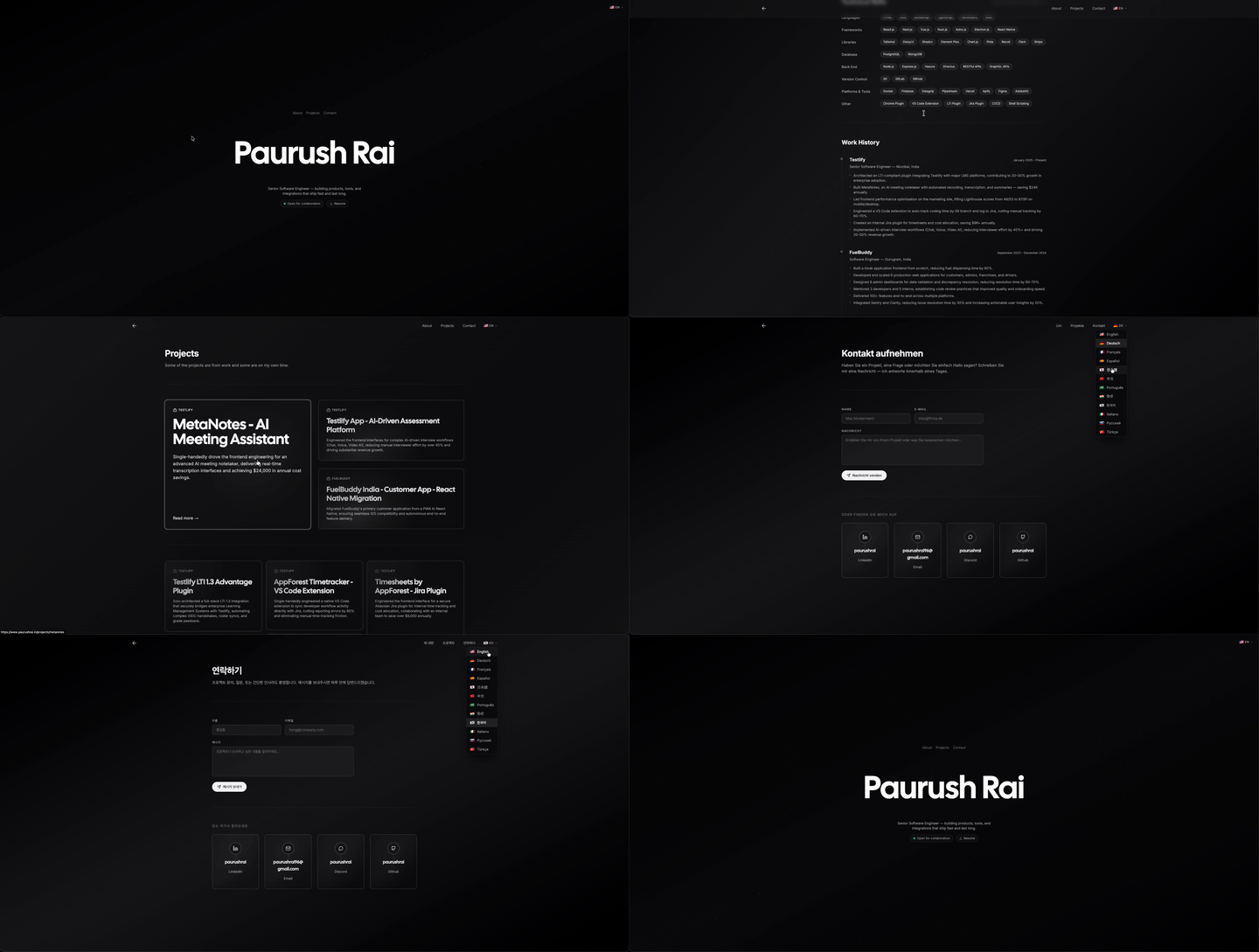
This is the site you're on right now. It's a Next.js 14 project built and maintained as a small product rather than a template — the codebase is public, so the details below are all verifiable. It scores 99/100 on desktop and 97/100 on mobile in Lighthouse, with 100 on Accessibility and SEO.
What's in it
-
12 languages: The site is available in English, German, Spanish, French, Hindi, Italian, Japanese, Korean, Portuguese, Russian, Turkish, and Chinese. A typed language context and translation map drive the switcher, which remembers your choice and updates the page's
langattribute so screen readers and search engines read the correct language. Every string is covered, including the contact form. -
A particle background that stays fast: The cursor-following dots are drawn on a canvas. An early version stuttered because it measured the canvas position on every mouse move, forcing constant layout recalculation. Caching that measurement removed the jank, and lazy-loading the particles keeps them out of the first paint — which is most of what got the desktop score to 99.
-
Analytics that ad blockers don't quietly break: Analytics scripts loaded from third-party domains get silently dropped by blockers like uBlock and Brave, losing 20–40% of events without any warning. Routing analytics through the site's own domain keeps the data first-party and intact. Umami handles the privacy-friendly stats; Google Tag Manager handles the rest.
-
SEO basics done properly: Structured data for the person and each project, correct language tags across all 12 versions of every page, canonical URLs so translations don't compete with each other, and social preview cards generated per project.
-
Accessibility: A skip-to-content link, visible focus outlines for keyboard users, AA-passing text contrast, decorative animations hidden from screen readers, and a language menu built as proper navigable markup rather than a styled div.
-
Content is just Markdown: Adding a project means dropping a Markdown file in the right language folder — it appears on the next deploy, fully typed, with no code changes. Page views are counted by a small serverless function that hashes IPs instead of storing them, so there are no cookies or personal data.
Why it matters
The site doubles as a working example of how the rest of these projects are built — performance, privacy-respecting analytics, multi-language support, and accessibility, all in one place you can inspect. Since the repository is open, the code can be checked against the description.